Inside Canva’s First Decade: How a Simple Idea Became a Super Unicorn
Preface This article distills the key early-stage experiences of Canva founder Melanie Perkins, and attempts to answer three very practical questions:
- How does someone without a business background discover real user needs?
- With no traffic and no resources, how do you land your first customers?
- Without elite schools or big-tech credentials, why would investors take the bet?
1. Needs Are Not Invented — They’re Forced Into Existence
In 2008, while studying at university in Perth, Melanie worked part-time teaching design classes. She noticed a painful reality: design tools at the time were clunky, desktop-only, and extremely hard to use. Beginners often needed years of training just to get started.
At the same time, Facebook was taking off — intuitive, frictionless, usable by anyone without training. That contrast sparked an idea in Melanie’s mind: what if design software could be simple, online, and collaborative?
She also knew her limits. Taking on giants like Adobe head-on would have been irrational at that stage. So she reframed the problem: start with a narrow use case and apply the idea to school yearbooks.
At the time, producing school yearbooks in Australia required hundreds of hours. The project leaders were usually regular teachers — already busy with full-time teaching and with no design background. The market was desperate for a better solution.
2. The First Product Isn’t the “Best Solution” — It’s the “Usable One”
Melanie didn’t wait until everything was ready. She created extremely detailed wireframes, borrowed money to hire an outsourced development team, and started working out of her living room.

The goal at this stage was crystal clear: not to build perfect software, but to validate whether anyone was actually willing to pay for the solution.
For many founders, this is the hardest step — because it requires accepting an imperfect beginning.
3. The First Customers Don’t Come from Growth Models — They Come from “Dumb Methods”
After launch, they had no channels, no brand, and no marketing experience. So they used the most primitive customer-acquisition methods imaginable:
- Direct mail blasts: the whole family helped fold flyers, lick stamps, and mail brochures to schools across Australia.
- Cold calls: calling school administrators directly and mailing free yearbook samples.
The process was tedious, but critical. Fusion Books’ early profitability didn’t just keep the company alive — it taught the team sales, customer support, and product delivery from scratch. More importantly, it taught them why users were willing to pay.
During this period, Melanie learned something fundamental:
Real business ability doesn’t come from frameworks. It comes from facing users directly — and building something valuable enough that people willingly pay for it.
When they received their very first $100 deposit, they even debated framing the check as a keepsake.
That’s what a first customer really means: proof that this is worth continuing.
4. Fundraising Without a “Shiny Background”: Breaking Investor Bias
At the time, investors were hunting for a familiar archetype — a repeat of Mark Zuckerberg:
- Ivy League or top-tier university degrees
- Former employees of Google, Apple, or Facebook
- Rapidly rising growth charts
Any deviation from this pattern was seen as a negative. Melanie seemed to check every “minus” box.
But she wasn’t starting from zero:
- They had worked with hundreds of Australian schools, personally handling product development, marketing, sales, and customer service — giving them deep insight into real user needs.
- They had a clear vision for the future and knew exactly which problem they were solving.
To break the stalemate, Melanie stayed in San Francisco for three months (originally planned for two weeks), sleeping on her brother’s floor.
-
Relentless meetings: no matter how early or late, if someone would meet, she showed up.
-
Radical follow-through: she once stayed awake for 36 hours straight to send a business plan before a promised deadline. The investor might not have cared — but Melanie did. If she said she’d do something, she did it. And the plan itself was high-quality — parts of it are still being executed today.
-
Playing the long game: when she learned that a key investor loved kite-surfing, she forced herself to learn it — despite a deep fear of losing control — just to attend the gathering.
In an email to investors, she wrote excitedly:
“Just got back from kite-surfing — can’t believe how fun it was! Oh, and by the way, I’ve found an incredible technical lead willing to take a pay cut to join us…”
This almost obsessive persistence is what ultimately convinced their early investors.
5. The Evolution of the Pitch Deck: How to Tell a Compelling Story
Canva’s pitch deck went through dozens of iterations.
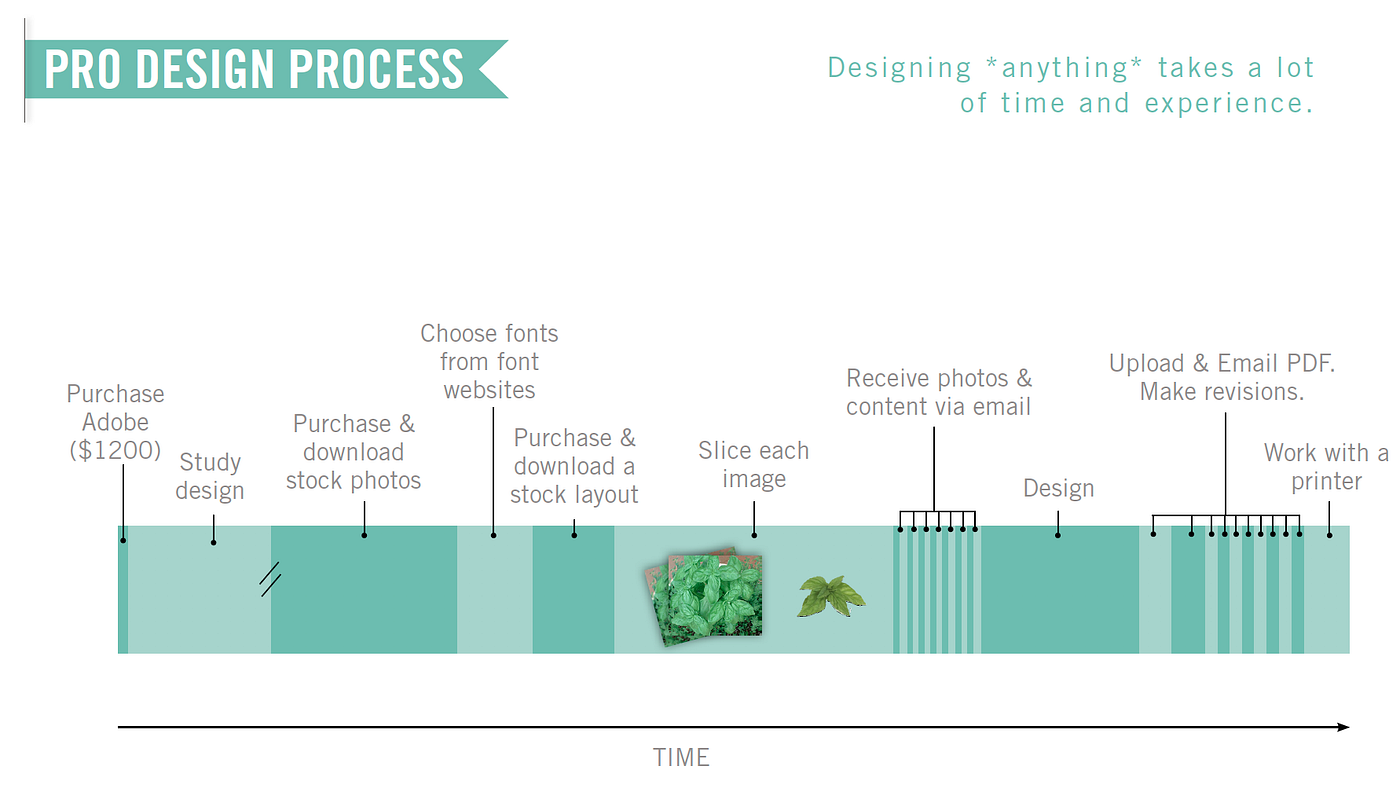
Many investors didn’t understand the design industry, so they added a slide explaining the complexity of the design workflow:
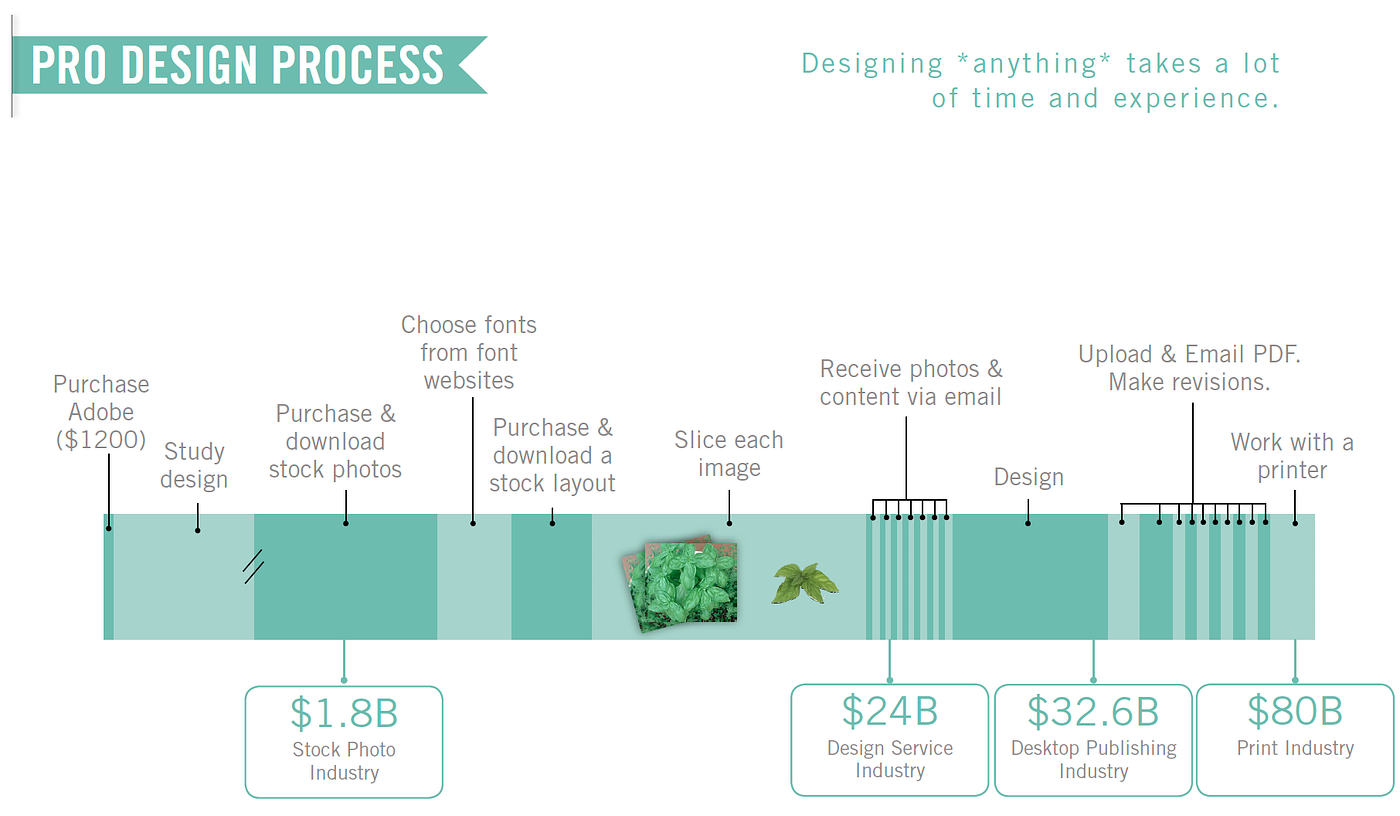
When investors couldn’t imagine a billion-dollar market, they added market-size analysis:
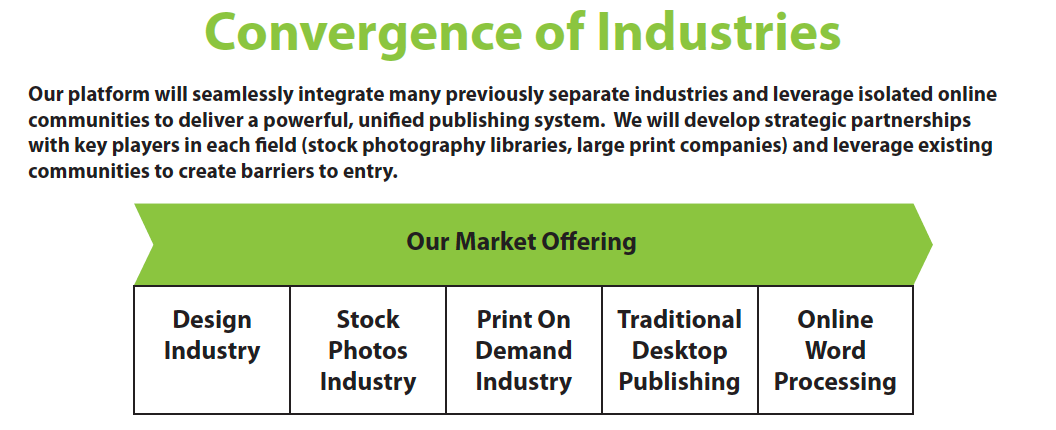
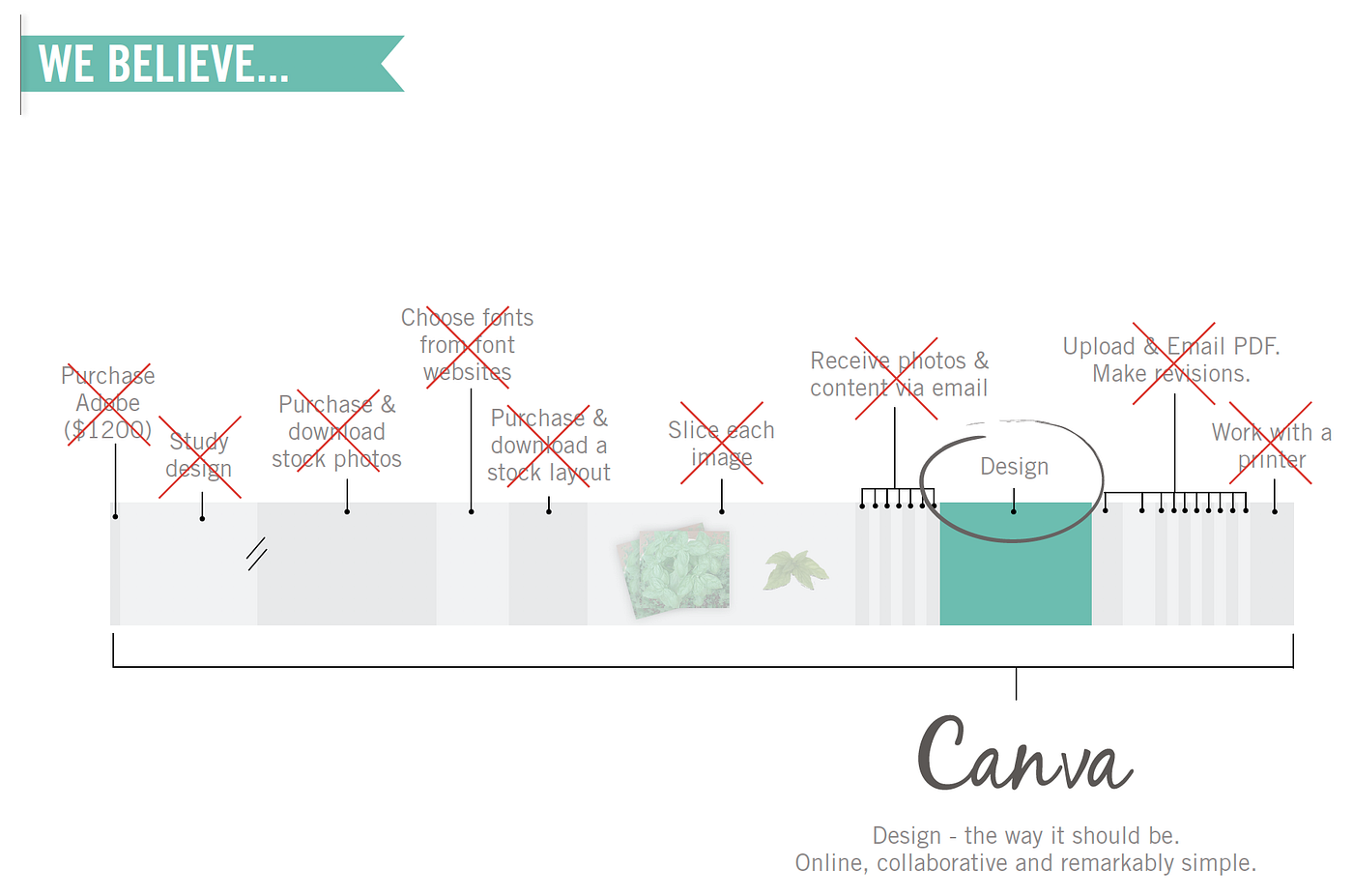
To explain Canva’s ambition — integrating the entire design ecosystem into a single, simple platform — they distilled it into one slide:
Investors often said, “Isn’t this just like Company X?” So Canva moved competitive differentiation earlier in the deck to preempt repetitive questions:
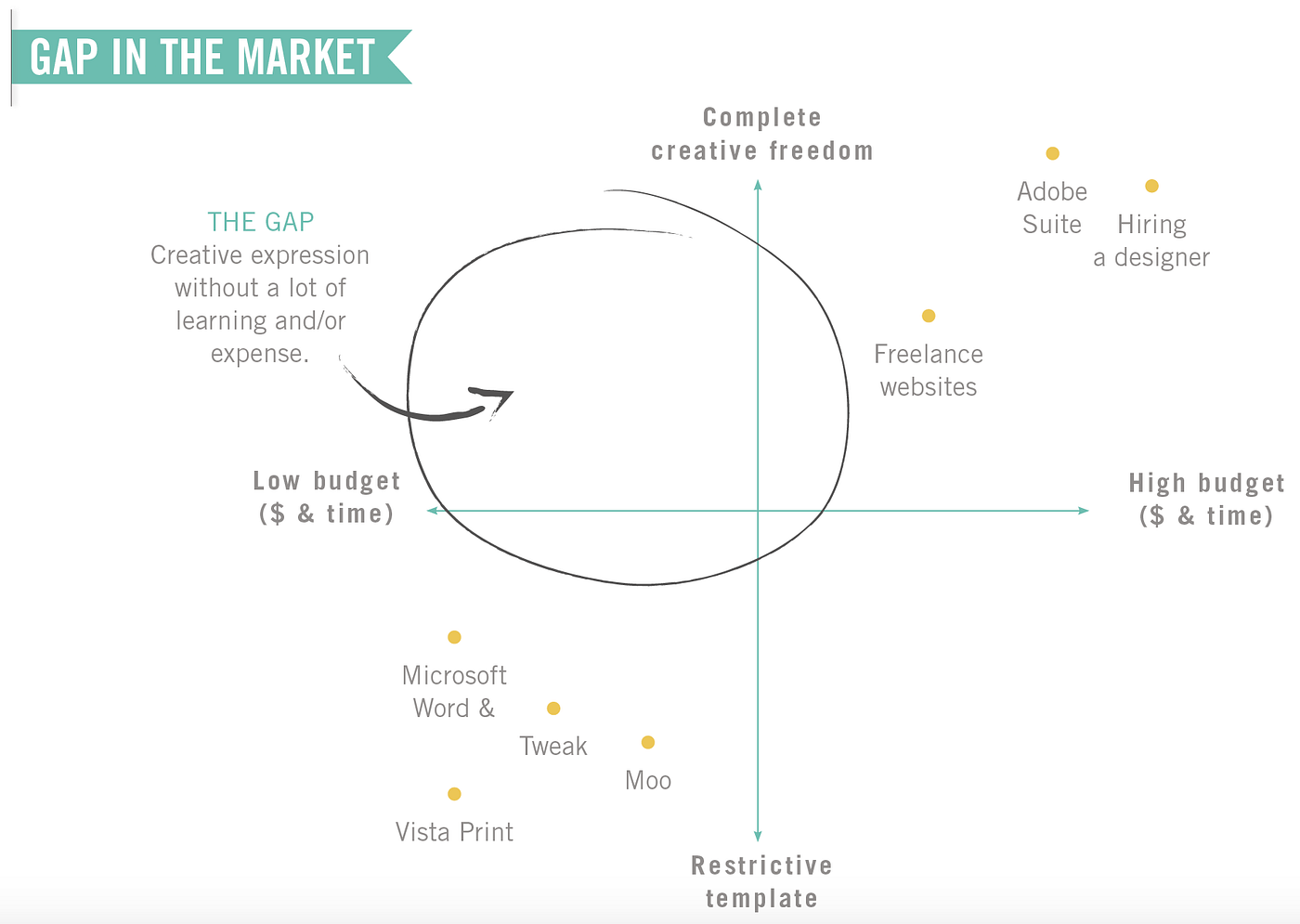
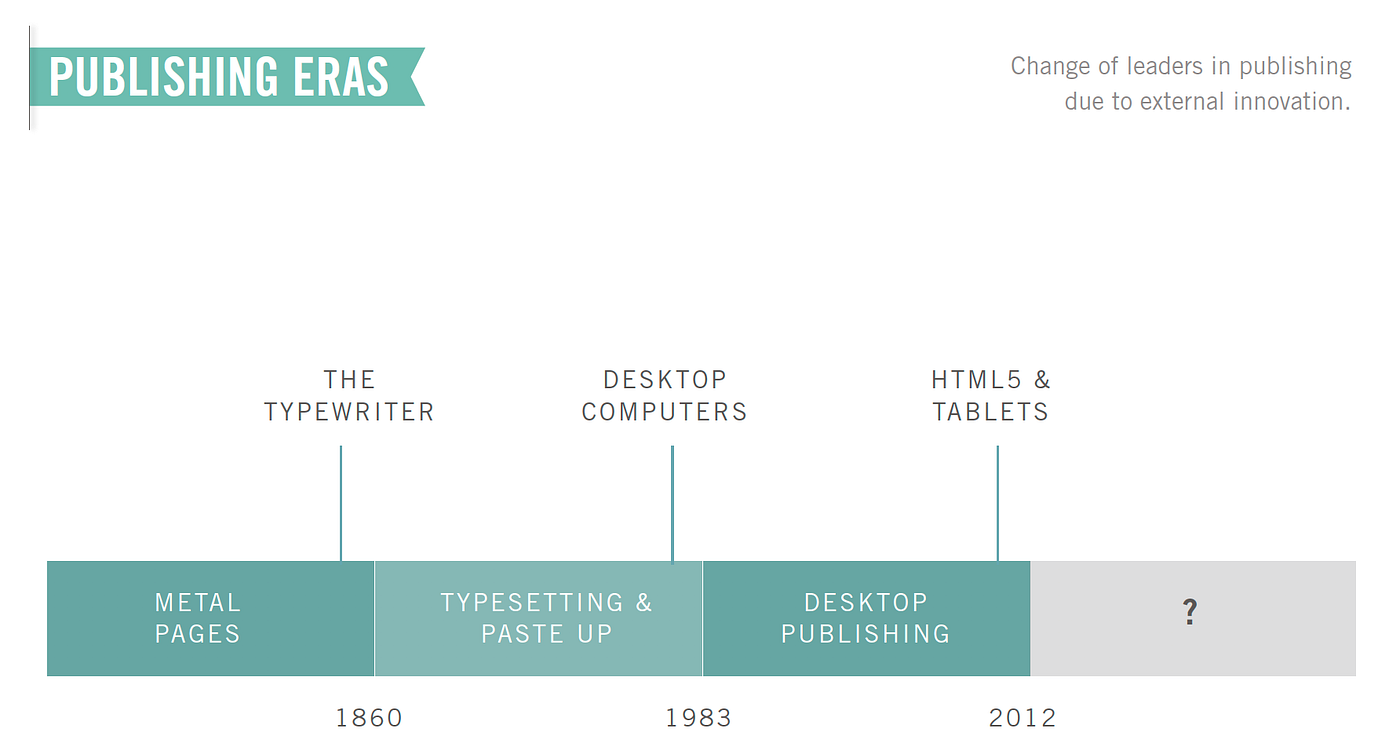
They were also asked: “What if a big company spends $500 million to build this?”
Canva’s answer: in major technological shifts, no dominant player lasts forever. Every era creates new market leaders.
Early on, Melanie tried positioning Canva as an “inventor.” It didn’t work. On advice, they added Fusion Books’ revenue numbers — $2M in revenue with 100% year-over-year growth — proving they weren’t just storytellers, but operators with real traction.
Whenever investors asked hard questions, the team updated the deck, putting the hardest questions at the very beginning. By the end of the pitch, there were few objections left.
Early Fundraising Reality: Hundreds of Pitches — What Changed?
Melanie realized something crucial: instead of asking investors whether they wanted to invest, she asked for advice.
This removed the possibility of immediate rejection — and sparked genuine engagement. She then revised the deck based on that advice and followed up later, leaving room for continued dialogue.
As the number of “suggestions” decreased, their vision became clearer — and investor interest grew. They eventually closed their seed round.
6. Product Cold Start: Overcoming Users’ Fear
User Testing: Exposing the Real Problem
Before launch, Canva had 50,000 people on its waiting list. But user testing revealed a disaster:
Users hesitated to click. When they did, they wandered aimlessly, hit obstacles, and eventually left frustrated.
This was far from the joyful experience Canva envisioned. The team quickly realized the real barrier wasn’t just the tool — it was the psychological belief: “I’m not a designer.”
Onboarding Redesign: Changing User Perception
Canva’s success depended on users having a great experience within minutes. So they completely rebuilt onboarding:
- No more blank canvas on first launch
- Introduced small tasks like “turn the circle red” or “put a hat on the monkey”
- Gamification: within two minutes, users felt, “Wow — I can actually design.”
This change was decisive. Fear turned into curiosity. Exploration replaced hesitation. Word-of-mouth exploded.
7. What Really Sustained Canva Wasn’t Luck
Looking back, one counterintuitive truth stands out:
Canva didn’t succeed because of a single flash of brilliance — but through relentless calibration around real problems.
Melanie summarized Canva’s core growth lessons from 0 to 1:
- Solve real problems Build something people genuinely care about.
- Offer a high-value free version A great free product accelerates organic growth.
- Start niche, then expand Focus narrowly first (Fusion Books), then scale broadly (Canva).
- Company-wide growth focus — beyond short-term wins Some teams work on long-term growth (global expansion, iPad/iPhone/Android), others on short-term optimization.
- Organize around goals, not hierarchy Canva minimizes titles and sets ambitious goals for each team.
- Obsess over onboarding Canva constantly tests and refines every detail.
- Take SEO seriously If users search for you, they must find you.
- Use data wisely A/B tests, user testing, surveys — each used in the right context.
- Always deliver real value In both product and marketing.
- Keep pricing accessible Cheaper, faster, more efficient products tend to win over time.
8. Founder Mindset: Staying Sane Under Pressure
Melanie shared several practical habits:
- Writing: clarifies thinking and restores focus
- Sleep: non-negotiable
- Vacations: essential for recovery
- Quiet time: find what truly relaxes you — and protect it
Drawing Strength from Challenges
Melanie once wrote to herself:
“You grow through challenges. Your wildest dreams are built from what you lack. Your courage comes from what you fear. Your character strengthens every time you fall. Your wisdom is born from mistakes. Your future is shaped by your past. Your sense of justice sharpens when you witness injustice. And rainbows only appear after storms.”
Conclusion: There Is Only a Beginning — No Finish Line
At the end of the article, Melanie shared another journal entry — a message for all founders:
“Your wildest dreams are built from what you lack. Your courage comes from what you fear. Your character strengthens every time you fall. Your wisdom is born from mistakes. Treasure the challenges you face — these gaps are what push us forward.”
For Canva, becoming a unicorn was only the first step. Melanie’s next goal is to use the company’s power to create real, positive impact in the world.
Final Notes
This long-form piece documents Canva’s journey from 0 to 1 — and from 1 to 100.
As Melanie often says, they “couldn’t believe their luck.” But anyone who knows the full story understands: that luck was earned through courage and relentless effort.
Even if a door opens just a crack — no matter how uncomfortable — you have to wedge your foot in.
That may be the most honest description of entrepreneurship.
Special thanks to Melanie for sharing her story. I hope this piece offers you a few moments of clarity and inspiration.
Twany
Writing about the web since 2004.